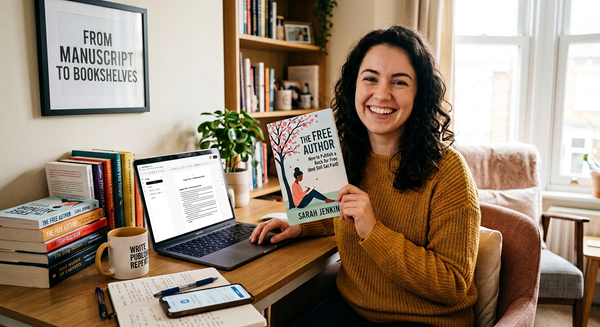
From Web Serial to Print Book: How PurrFiction Authors Can Now Publish in Paperback and Hard Cover


If you read PurrFiction serials, you read them on a screen, one episode at a time. As of this week that's no longer the only option. PubliWrite and PurrFiction have built a direct integration: a PurrFiction author can pull their book into PubliWrite and publish it as a paperback or hardcover, without rebuilding the manuscript chapter by chapter.
Here's what the integration does, why it took three months, and what it would take to do the same thing for another platform.
The gap between "popular online" and "in print"
Web fiction is a big business. In China alone the web-novel market is estimated at over $2.5 billion a year, and in the West Wattpad, Royal Road, Webnovel and ScribbleHub have each built readerships that follow stories week by week. Some of those stories have tens of thousands of readers and are, by any reasonable measure, finished books.
Almost none of them were written with print in mind, and it shows the moment an author tries to turn one into a physical copy. Three things get in the way.
Pacing: A serial is written in cliffhanger-sized chapters designed to be released weekly. A printed book gets read in long sittings. Episodes that worked as standalone drops can feel choppy when they're stacked back to back, and the "previously on" recaps that helped a weekly reader become dead weight on paper.
Formatting: Text on a platform has no trim size, no running header, no page breaks, no front matter. It's a stream of chapters. Everything a printed interior needs has to be built from scratch.
Files: Most serial platforms hold the manuscript inside their own reader and have no way to export it. The book exists, but not in any form a print-on-demand service can take. That leaves the author copying and pasting hundreds of chapters into a word processor, which is usually the point where they give up.
So an author with thousands of loyal readers and a complete story has had no practical route to a physical copy. That's what this integration fixes, starting with PurrFiction.
What the integration does
A PurrFiction author can now bring a book straight into PubliWrite's Creator Studio. From there it goes through the same pipeline every PubliWrite title uses:
- Import: The manuscript comes over from PurrFiction with its chapters and metadata intact. No pasting, no re-uploading.
- Format: PubliWrite's formatting tools turn it into a print interior: trim size, running heads, chapter openers, page numbers. There are 11 paperback and hardcover trim sizes to choose from.
- Cover: The built-in cover designer handles the parts a digital cover never needed, mainly spine width and bleed, both of which change with page count and trim size.
- ISBN: Assigned automatically during publishing, or the author can bring their own.
- Print on demand: Copies are printed when a reader orders one. No inventory, no minimum run, no upfront cost.
- Author copies: An author can order their own book at printing cost
- Distribution: Orders ship to more than 150 countries, and there's no exclusivity requirement. The serial can stay live on PurrFiction and anywhere else.
Before this week, none of these steps were available to a PurrFiction author. Now they're all in one place, and the first one, which used to be the hardest, is a button.
What it took to build
This wasn't a weekend project. The connection between the two platforms took two months to build, then a further month of testing with real manuscripts, checking that chapter order, headings, italics, scene breaks and book metadata all came through cleanly on PubliWrite's side. Nobody was going to put their name on a printed book with a chapter missing.
Three months in total, for anyone wondering what a project like this costs in engineering time.
Where things stand
We're announcing the integration this week, so there are no sales figures yet and we're not going to invent any. What we can say is that authors started importing their books before the public announcement went out. They found the option in Creator Studio and used it. For a launch, that's the signal we were hoping for.
If you're a PurrFiction author: getting a serial ready for paper
The import handles the mechanical work. A few things are still worth doing yourself before you hit publish.
- Check your word count: A serial that ran for two years might be 400,000 words, and print-on-demand has practical page-count limits, somewhere around 800 pages for most paperback formats. Long serials usually work better as a series of volumes split at arc boundaries, which also gives you something new to release every few months.
- Decide what to do with recaps, author notes and chapter-end teasers: Most of them should go. A reader holding the book doesn't need reminding what happened on the previous page.
- Look at chapter lengths: If your episodes were 1,500 words each, consider merging some. Short chapters are fine, but 200 chapter headings in one paperback looks odd on the page.
- Write a back-cover blurb: Your online description was written for people who could start reading for free. A print blurb is selling a purchase.
- Move your extras: A map, glossary or character list lives on a separate page online. In a book it needs to go in the front or the back.
None of this is required. Plenty of authors will import, format and publish in one sitting. But an hour of tidying makes a noticeably better book.
If you run a platform: what an integration actually needs
We're open to building the same thing for other platforms where readers binge chapters online: serial sites, subscription-fiction apps, translation platforms, anywhere writers keep asking whether they can hold their book in their hands.
To set expectations, here's roughly what the PurrFiction integration needed from their side:
- A way to export a book as structured text: chapters in order, with headings and basic formatting preserved, plus title, author name, description and cover image.
- Stable book and author IDs, so a manuscript can be matched to the right PubliWrite account.
- A way for an author to authorise the connection, so nobody can import a book that isn't theirs.
- Someone on the platform side willing to spend a few weeks testing with real manuscripts, because the edge cases (a chapter that's entirely dialogue, a title with an emoji in it) only show up in real data.
In return, the platform's authors get a print edition without leaving for another service, the serial stays where it is, and the platform has a real answer to a question its writers have been asking for years.
If that sounds like your platform, email us at info@publiwrite.com and we'll walk you through it.
Two common questions
Do I need a PubliWrite account? Yes. The import links a PurrFiction book to a PubliWrite account. The free plan is enough to get started but you'll need your own ISBN if you're on a free plan. Please note you must use the same email account on both Purrfiction and PubliWrite side for this to work.
Is this exclusive? No. Like every PubliWrite title, there's no exclusivity requirement. Your serial can stay on PurrFiction and anywhere else you publish it.
What's next
Once there are real numbers, we'll share them: first orders, first copies shipped, and what authors say when the box arrives. If you're a PurrFiction author with a finished arc, it's in Creator Studio now.