
How to Design a Book Cover: A Complete Guide for Self-Published Authors (2026)


"Don't judge a book by its cover" is one of those phrases everyone agrees with and almost nobody actually follows.
In practice, covers are exactly how books get judged - and not just by casual readers. By algorithms that decide which thumbnails to surface. By retailers that determine which titles get featured. By the part of every reader's brain that has already formed an opinion before the conscious mind has finished loading the page.
Before you reach the blurb, the reviews, or the first page, something has already happened. One look at a thumbnail on a crowded screen and the decision is essentially made - the book feels like it belongs in your hands, or it doesn't. That response isn't really conscious, which is exactly what makes it so difficult to argue with.
In a market where thousands of new titles appear every day, a cover isn't decoration. It's a signal; one that tells a reader almost instantly what kind of experience they're being offered, whether the book is for someone like them, and whether it belongs alongside the other titles they already trust. Get that signal right and readers lean in. Get it wrong and the writing behind it may never get a fair chance.
A great cover doesn't just attract attention. It makes the right reader feel like the book was made for them.
Why Book Covers Matter More Than Ever
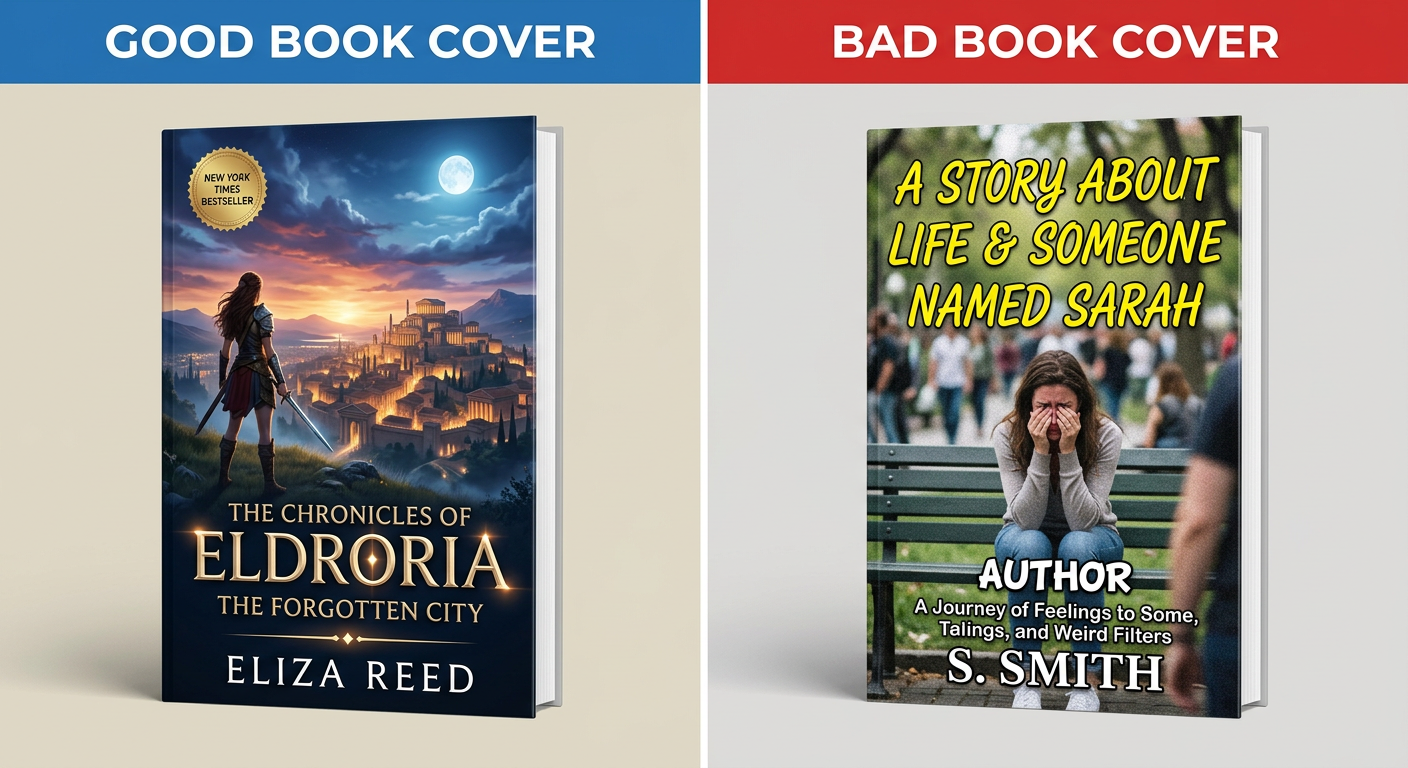
Book discovery has always been fast. What's changed is the scale.
Whether a reader is moving through a physical bookstore or scrolling a retailer's homepage on their phone, the decision window is roughly the same; a fraction of a second, a glance, a gut response. The difference is that a bookstore might stock a few thousand titles. Amazon has millions. And on a phone screen, a cover is the size of a postage stamp.
At that size, detail disappears. Subtlety disappears. Even genuinely good design can disappear if it isn't doing the right job at the right scale.
What survives is clarity and instant recognition. Before a cover can express anything, it has to stop someone who wasn't planning to stop.
Think of it less as art and more as a performance asset. It has about one second to do three things: interrupt the scroll or the shelf-scan, signal that this book belongs in a category the reader already cares about, and earn the click or the pickup. In that order. If it fails the first, the other two never happen.
Platforms don't surface covers because they're beautiful. They surface covers that get clicked. Bookstore browsers don't slow down for covers that need to be studied. They slow down for covers that land immediately; that feel, at a glance, like exactly what they were already looking for.
What a Great Cover Actually Communicates
A cover doesn't tell readers about a book. It makes them feel something about it and that feeling either pulls them in or it doesn't. The best covers answer four questions before the reader has consciously formed a single one.
1. What genre is this?
Not approximately, not with some thought - immediately. Genre recognition is the cover's most fundamental job, and it works through visual shorthand that readers have absorbed from years of browsing: the colour palette of a thriller, the typography of a romance, the imagery of a fantasy. If a reader has to spend a moment figuring out what kind of book they're looking at, that moment is already too long.
2. What does it feel like?
Dark or hopeful. Tense or tender. Funny or devastating. The emotional register of a book should be legible from the cover before anyone has read a word. Readers are searching for a mood; and the cover is the first place they look for that information.
3. Who is this for?
Not everyone - someone specific. The most effective covers aren't trying to appeal broadly. They're trying to make one particular kind of reader feel immediately recognised.
4. Is this professional?
Readers won’t consciously say it, but they’ll feel it immediately. A cover that looks self-made, slightly off, or generically assembled signals something about what's inside - fairly or not.
A useful way to test this: if your ideal reader saw your cover for three seconds and looked away, would they feel like that book was for them? Not understand it. Not be able to describe it. Just feel it.
Genre Conventions and Why You Should Respect Them
There's a piece of advice that gets self-published authors into trouble more reliably than almost any other: be different. It sounds right. Originality is good. Standing out matters. And in most creative decisions about a book, those instincts are worth following. Cover design is the exception.
Readers browsing a genre aren't looking for something they've never seen before. They're looking for something they already know they like, executed well. The visual language of a genre: its colour palettes, its typography, its imagery; they exists because readers have learned to use it as a sorting system. It tells them, instantly and without effort, whether a book belongs in the category they're shopping in.
Romance covers use soft lighting, human figures, and flowing typography because those signals have become the genre's visual shorthand. Thriller covers lean on bold fonts, high contrast, and a kind of visual tension that puts the reader slightly on edge before they've read a word. Fantasy covers reach for scale, symbolism, illustration, and light in ways that signal a world larger than the one you're standing in. Non-fiction covers tend toward clean layouts, strong authoritative typography, and a visual seriousness that says: this was researched.
These aren't arbitrary trends. They're a language that readers have spent years becoming fluent in; and a cover that ignores that language doesn't read as original. It reads as confusing.
The goal isn't to look like every other cover in your genre. It's to look like you belong in your genre, and then find the specific element: the colour choice, the image, the typographic detail, that makes you the one they pick. That's a meaningful distinction. Skipping the first step in pursuit of the second is where most self-published covers quietly fail.
Fit in first. Then stand out within the category. In that order.
The Core Elements of an Effective Cover
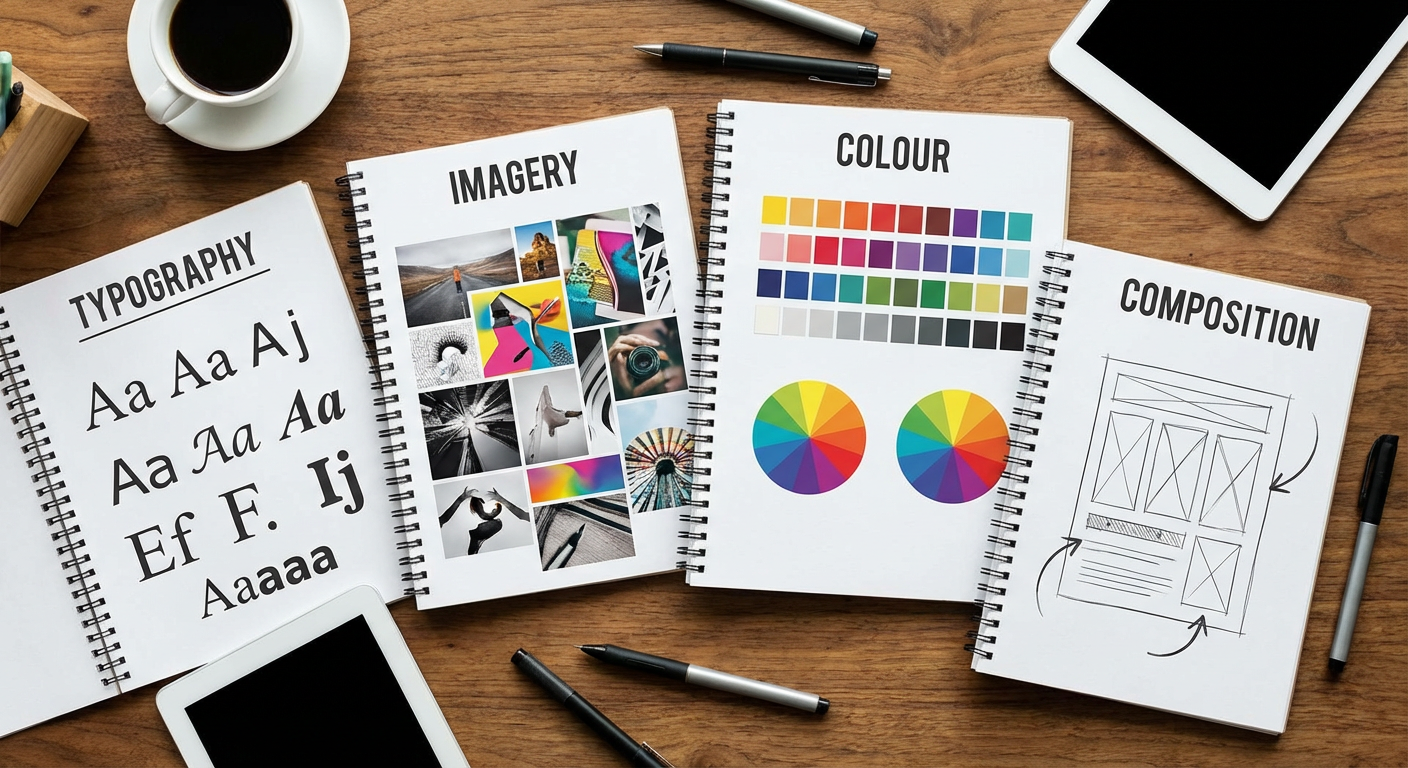
A cover is made of four things. Get all four working together and the result feels effortless. Get one wrong and the whole thing starts to unravel - often in ways that are hard to diagnose but easy to feel.
Typography: This Carries More Weight Than You Think
The title is the first piece of information a reader needs, and it has to land in half a second at thumbnail size. That rules out a significant portion of decorative fonts, which look considered at full scale and dissolve into illegible noise the moment the cover shrinks to fit a phone screen. What looks ornate and interesting in a design file often looks like a smudge in a search result.
Genre alignment matters here too. Typography carries tone - a serif with historical weight reads differently than a hand-lettered script, which reads differently than a bold sans-serif with tight tracking. Readers absorb these signals without thinking about them. A thriller with soft romantic typography creates a dissonance that undermines both the cover and the book's credibility before anyone has read the blurb.
Imagery: Emotion in One Frame
Imagery is what creates the emotional hook: the thing that makes a reader feel something about the book before they've processed what it's about. Whether that's photography, illustration, or abstract composition matters less than whether the image is doing something specific.
Generic stock photography is one of the fastest ways to quietly kill a cover's credibility. Readers may not recognise a stock image consciously, but they feel the lack of intention behind it. Good imagery feels like it was chosen for this book, not pulled from a library and placed on a template. That specificity is the difference between a cover that resonates and one that's simply present.
Colour: The Fastest Psychological Signal
Colour communicates before anything else does. Dark palettes carry tension, danger, and weight. Warm tones suggest intimacy and emotional warmth. Bright, clean colours signal clarity and utility which is why they dominate non-fiction and self-help. These associations aren't universal laws, but they're consistent enough that working against them without a strong reason creates friction.
The mistake most authors make isn't choosing the wrong colours; it's choosing too many. A strong, limited palette almost always outperforms a complex one. Complexity reads as noise at small sizes. Restraint reads as confidence.
Composition: What the Eye Finds First
Every cover has a visual hierarchy whether the designer intended one or not. The question is whether that hierarchy is working for the reader or against them.
The eye needs somewhere to land: title, image, or author name. And it needs to land there quickly. When all three compete for equal attention, the reader's eye has nowhere to settle, and the cover registers as busy rather than bold. Good composition removes that ambiguity. It makes the decision for the viewer before they've consciously realised a decision was being made.
Think of it as editing. The best covers are the ones where everything unnecessary has been taken out, and what remains is exactly enough.
Designing for Thumbnails: The 2026 Reality
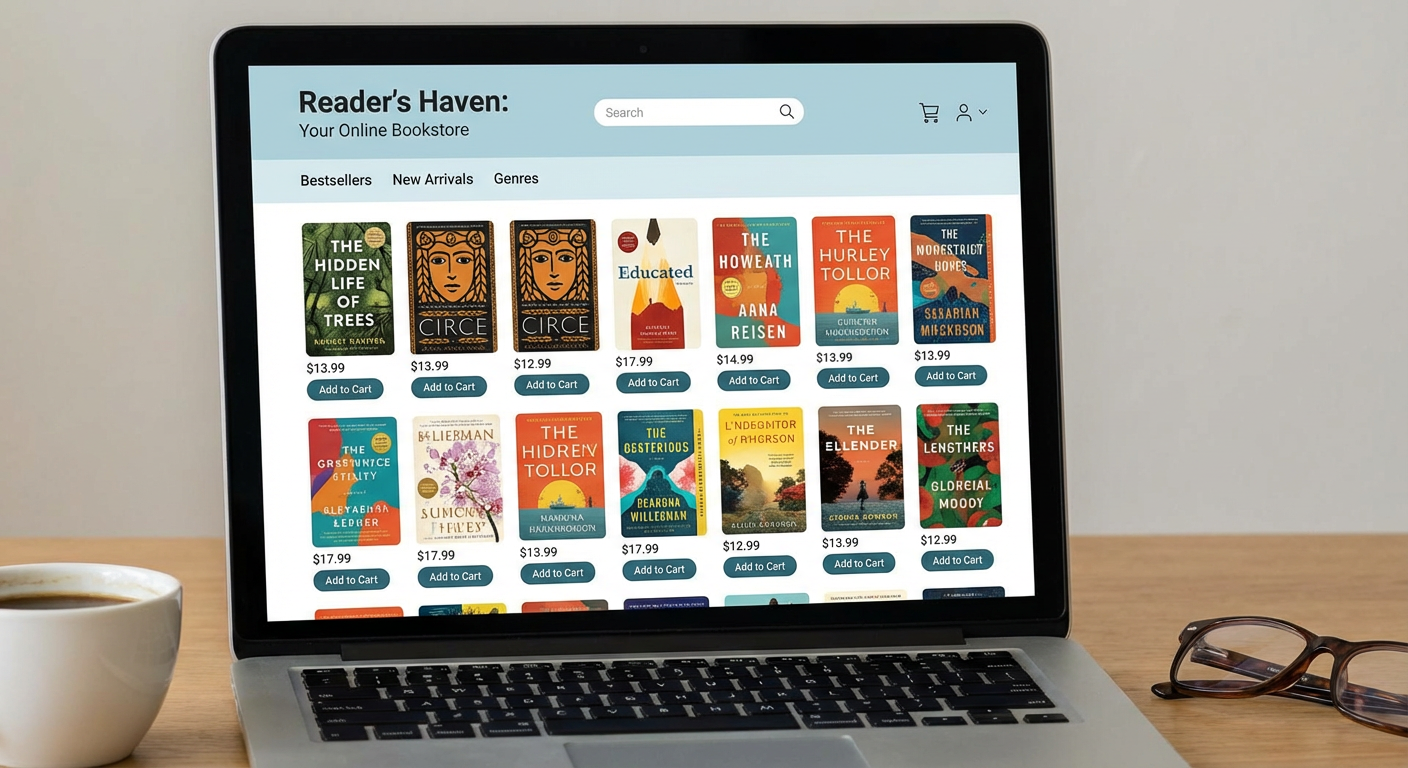
Here's the uncomfortable truth about where most readers will first encounter your cover: a grid of search results on a phone screen, at a size roughly equivalent to a postage stamp, while scrolling past dozens of other books at speed.
Not a beautifully lit bookstore display. Not a full-screen product page. A thumbnail, competing with hundreds of others, viewed for less than a second before a reader decides whether to stop or keep moving.
This means designing a cover at full size and then hoping it scales is working backwards. The thumbnail isn't a smaller version of the cover - it's the version that matters most, and everything else should be built out from there.
Three tests are worth running before you consider a cover finished.
The zoom-out test: shrink the file to ten or fifteen percent of its original size. This is roughly the scale at which most readers will first see it. If the title becomes difficult to read, if the imagery loses its clarity, if the overall impression turns muddy - those are problems that will cost you clicks in the real environment, and no amount of full-size beauty will compensate for them.
The grayscale test: strip out the colour entirely and look at what remains. Contrast is what gives a cover its structure, and colour can mask the absence of it. A cover that relies on colour to do the work of contrast will look flat and undifferentiated in contexts where colour rendering varies which, across devices and screen settings, is more common than most authors expect.
The blur test: apply a slight blur and see whether the composition still holds. If the essential shapes and the rough placement of text survive blurring, the cover has genuine structural clarity. If it collapses into an indistinct smear, the design is relying on detail it won't have at the sizes that count.
Complexity disappears at thumbnail scale. Clarity scales with it. The authors who understand this early have a real competitive advantage not because their covers are more beautiful, but because their covers are still working when everyone else's have stopped.
DIY vs Hiring a Designer
This isn't a question with one right answer; it's a question that depends on where you are in the process and what you're trying to achieve.
When DIY Makes Sense
If you're early in your publishing journey, testing a concept, or working with a limited budget, designing your own cover is a completely reasonable place to start. Tools like Canva have lowered the barrier significantly, and more advanced options like Adobe Photoshop or Illustrator give you greater control once you're comfortable with the fundamentals.
The caveat is that tools don't replace taste; and taste, in this context, means understanding what works in your genre, why it works, and how to execute it at the scale and clarity that modern retail environments demand. A simple, clean cover executed with genuine intention will outperform a complex one that's been assembled without that understanding every time.
DIY works best when you're willing to study the genre carefully, look at what's performing well, and treat the design process as seriously as you'd treat any other craft decision about the book.
When to Hire a Designer
The moment your goal shifts from getting published to actually selling; that's when professional design starts earning its cost.
A good cover designer brings more than technical skill. They understand the visual language of your genre without having to be taught it, know how typography choices communicate tone before a reader has processed the words, and can make compositional decisions that feel instinctive because they've solved the same problems across dozens of covers. That accumulated judgment is what you're paying for, not just execution.
Platforms like Fiverr and Upwork are reasonable starting points, though the quality range is wide enough that you need to look carefully at portfolios; specifically at covers in your genre, not just at general design work. A designer who produces beautiful corporate branding may have no instinct for what makes a romance or a thriller cover work.
A strong cover rarely feels like a cost for long. Not because it's more attractive, but because it converts better: more clicks, more samples read, more sales. The design either pays for itself or it doesn't, and that's a more useful frame than thinking about it as an upfront expense.
Designing with AI
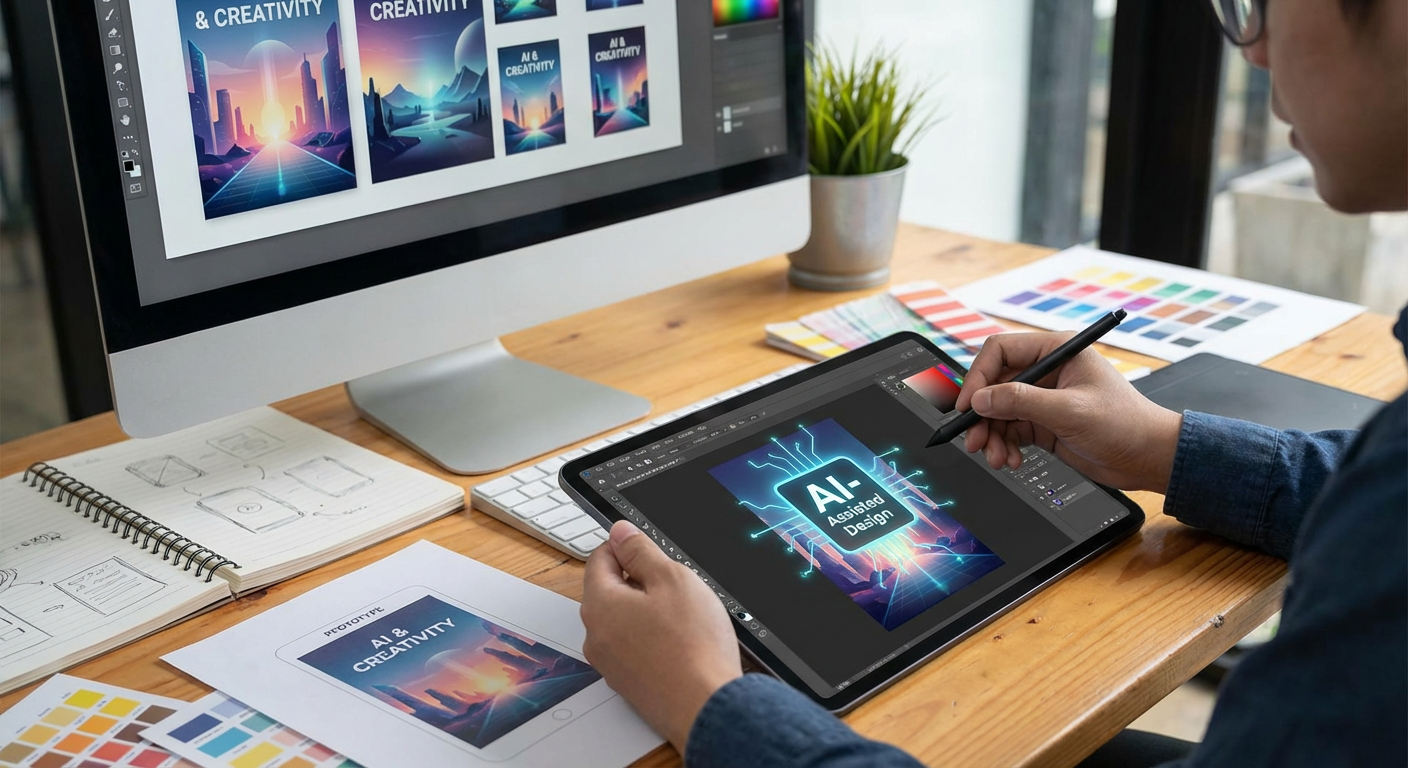
There's a third option that didn't meaningfully exist a few years ago: using AI tools to generate or assist with cover imagery.
Tools like Midjourney and Adobe Firefly can produce atmospheric, genre-appropriate visuals that would have required a commissioned illustrator not long ago. For fantasy, science fiction, and other illustration-heavy genres especially, the results can be genuinely striking. The ability to iterate quickly and arrive at something specific to your book's world rather than pulled from a stock library is a real advantage.
The limitation most authors hit is typography. AI tools that generate full cover compositions tend to treat text as another visual element rather than something that needs to be readable and precisely placed. The result is often a compelling image with lettering that falls apart at thumbnail size. Most authors using AI effectively are generating imagery with AI and finishing the typography and layout in a separate tool.
It's also worth knowing that the legal landscape around AI-generated imagery is still evolving; the question of ownership isn't fully settled, and it's worth understanding before you publish.
Used with the same critical eye you'd apply to any other design decision, AI can close the gap between a DIY cover and a professional one considerably. Used as a shortcut, it produces covers that look almost right which is a harder problem to fix than a cover that's clearly wrong.
Common Mistakes That Kill a Book Before It Starts
The covers that don't work tend to fail in the same ways. And most of those ways trace back to the same root cause: trying to do too much.
Too many elements competing for attention: A cover with five things asking to be noticed first ends up with nothing noticed at all. The eye needs a clear entry point: one dominant element that pulls the reader in and leads them through the rest. When everything is equally important, nothing is.
Weak or unreadable typography: The title has one job: be read instantly. Decorative fonts, low contrast between text and background, and type that's been scaled down to fit around imagery rather than integrated into the composition are the most common culprits. If someone has to work to read your title, they won't.
Ignoring genre conventions: Covered earlier, but worth repeating: readers use visual language to sort books quickly. A cover that doesn't speak that language doesn't read as original; it reads as out of place.
Low contrast: Contrast is what gives a cover its structure and legibility, especially at small sizes. Covers that look soft and atmospheric at full scale often become flat and indistinct as thumbnails. If the design relies on subtle tonal differences to carry its weight, it's relying on something that won't survive the environments where readers actually shop.
Trying to be different for its own sake: Originality within a genre is an asset. Originality that ignores the genre entirely is a liability. The instinct to stand out is right but the execution needs to start from within the category, not outside it.
Unedited stock imagery: A stock image dropped onto a template without significant editing signals exactly what it is. Readers may not identify the specific image, but they feel the absence of intention behind it. If you're using stock photography, treat it as raw material rather than a finished element.
When in doubt, the fix is almost always the same: take something out. The covers that work aren't the ones with the most going on. They're the ones where everything that's left is earning its place.
A Simple Process You Can Actually Follow
Cover design doesn't have to be a guessing game. Most successful covers come from the same disciplined process, and it's one any author can follow regardless of experience or budget.
Study your category first: Look at the top ten to twenty books in your genre - not just the ones you like, but the ones that are actually selling. Pay attention to what they have in common before you start looking for what makes them different.
Identify the patterns: Fonts, colour palettes, imagery style, how the title is placed, how much negative space is used. You're building a visual vocabulary before you make a single design decision. This step takes longer than it feels like it should, and it's worth it.
Define your position: Similar enough to belong in the category. Different enough that someone scanning a page of results would pause on yours. That's the target; not radical originality, not invisible conformity, but the specific point between them where recognition and distinction coexist.
Create two or three directions: Don't fall in love with your first idea before you've tested it against alternatives. Different imagery, different colour approach, different typographic treatment. The best cover often isn't the first one; it's the one that survives comparison.
Test at thumbnail size, with real readers. Not just your own eye at full scale. Show it to people who read in your genre and watch their response, not what they say, but whether they lean in or move on. That instinctive response is the data that matters.
Refine rather than reinvent: Once you have a direction that's working, small adjustments almost always outperform starting over. A different font weight, a colour shift, a slight change in composition - these tend to move the needle more reliably than a complete redesign.
Final Checklist Before You Publish
Before the cover goes live, run through these honestly:
Is the title readable at thumbnail size? Is the genre immediately clear to someone who didn't write the book? Does it look comparable to what's currently selling in the category? Is there enough contrast to hold its structure across different screens and sizes? Is there a single clear focal point, or is the eye left to wander? Does the whole thing feel intentional?
If you hesitate on more than one of those, it's worth another pass before you publish. A cover that almost works is still a cover that's losing you readers.
How PubliWrite Approaches Cover Design
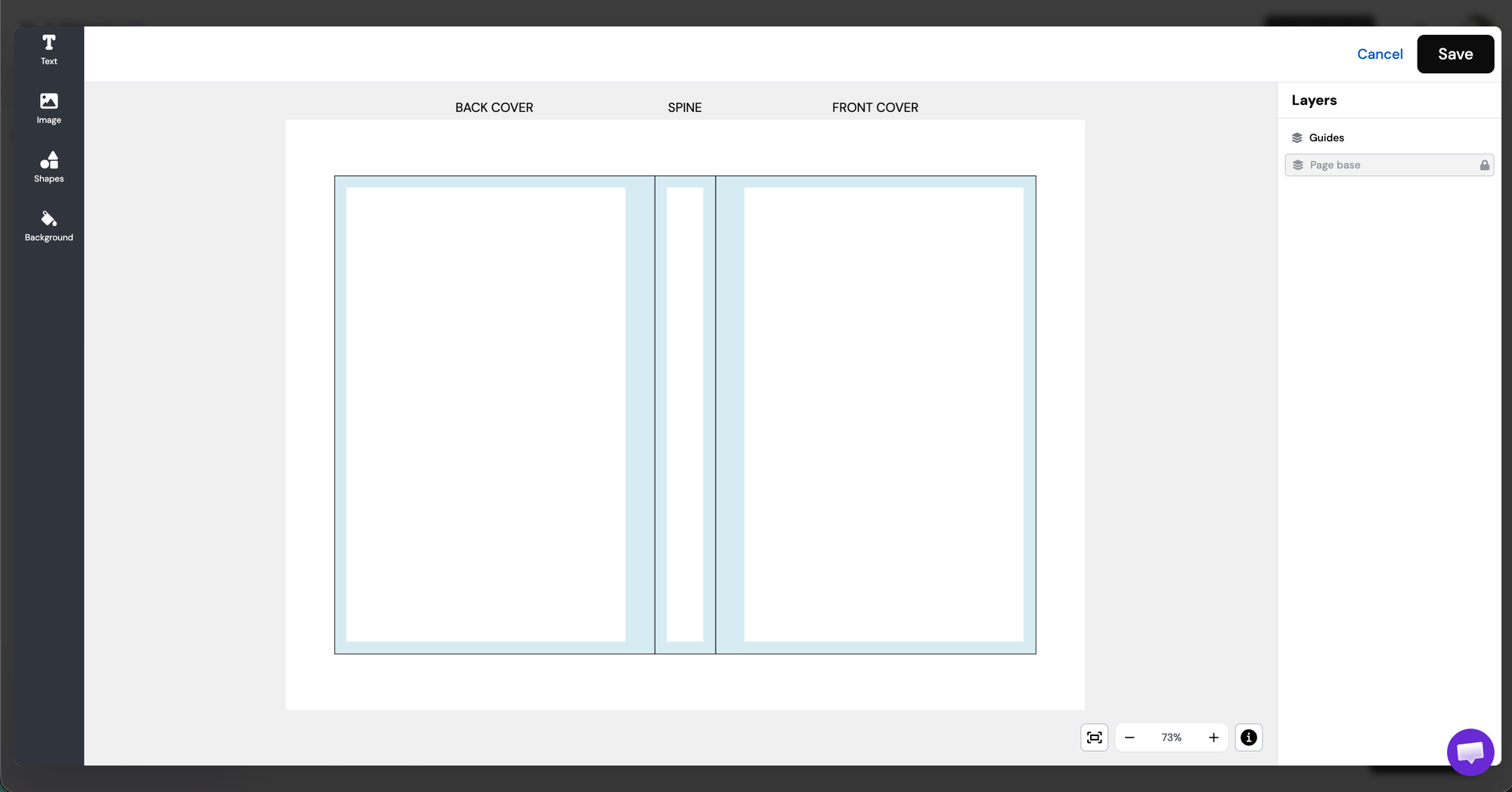
Most cover design tools are built for designers. PubliWrite's cover builder is built for authors.
The starting point is simplicity without sacrifice. The tools are accessible enough that an author with no design background can produce something that looks considered and genre-appropriate, while offering enough control that someone with a clearer visual vision can execute it without hitting unnecessary ceilings. The goal is a cover that competes; not a cover that's merely finished.
The feature that changes the dynamic most significantly is real-time collaboration. An author can invite a designer, a cover artist, or a trusted reader directly into the cover builder and watch the design take shape as it happens. No exporting files back and forth. No waiting on email attachments. No describing in words what you mean and hoping the result matches the image in your head.
Instead, the author stays in the room. They can see every decision as it's made, respond in the moment, and shape the direction of the cover as a genuine conversation rather than a series of delayed approvals. The designer brings the craft. The author brings the knowledge of what the book actually is. That combination, happening in real time, tends to produce covers that feel right in ways that the traditional back-and-forth process often doesn't.
Because the best cover for your book isn't just one that looks professional. It's one that reflects what's actually inside it and getting there usually requires the person who wrote it to be involved in more than just the final sign-off.
Final Thoughts: Your Cover Was Always Going to Be Judged
Don't judge a book by its cover" is advice about people, not publishing. As a reminder to look past appearances and give things a fair chance, it's reasonable enough. As a strategy for selling books, it's exactly wrong.
Readers have always judged books by their covers. They did it in bookstores, running a finger along a shelf and pausing on something without quite knowing why. They do it now on phone screens, scrolling past hundreds of thumbnails in the time it used to take to walk between two shelves. The scale has changed. The instinct hasn't.
The question was never whether that judgment was fair. Books are chosen on feeling before they're chosen on logic, and a cover is where that feeling starts. The authors who understand this don't resent it: they design for it.
For self-published authors especially, that design is now more within reach than it has ever been. The tools exist. The knowledge of what works in a genre is visible to anyone willing to study it. The gap between an independent cover and a traditionally published one is closable - not by spending more, but by paying more attention.
Your cover will be judged. It will be judged quickly, instinctively, and by people who don't know yet that they're going to love what's inside.
The only real question is whether it's ready for that moment.
👉 Do you think readers underestimate how much a cover influences them - or do most people know exactly what's happening and buy into it anyway?
Before you go:️️
- Follow us: X | LinkedIn | Instagram | Meta
- Visit our website at https://publiwrite.com