Do I Need an ISBN? The Truth for Self-Published Authors


If you’re preparing to publish your book, you’ve probably come across four letters that seem far more complicated than they should be: ISBN.
Some platforms offer a "free ISBN". Others tell you to buy your own. Some authors say you absolutely need one. Others claim you don’t. And somewhere in between, you’re left wondering:
Is an ISBN essential? or just another unnecessary expense?
The confusion is understandable. ISBNs are often mentioned alongside distribution, libraries, metadata, and publishing "legitimacy", yet very few authors are ever told what they actually do or when they truly matter.
The truth is this: an ISBN isn’t about prestige, and it isn’t about copyright protection. It’s about identification and distribution. It’s a tool created long before self-publishing existed, designed to help bookstores, wholesalers, and libraries catalogue and order books efficiently. But in today’s digital publishing landscape, its role has both expanded and blurred.
In 2026, authors have more publishing options than ever before. You can upload directly to Amazon without purchasing an ISBN. You can distribute globally through aggregators. You can publish ebooks, paperbacks, hardcovers, and audiobooks - sometimes all at once. Each route comes with different ISBN requirements, different levels of control, and different long-term implications.
So the real question isn’t just:
Do I need an ISBN?
It’s:
What kind of publishing future am I building and how does an ISBN fit into it?
In this article, we’ll explore where ISBNs came from, what they’re actually used for, the most common misconceptions authors have about them, and when it truly makes sense to invest in one. By the end, you’ll know whether an ISBN is necessary for your book and more importantly, whether it’s necessary for your goals.
Where ISBNs Started - A Short History
To understand whether you need an ISBN today, it helps to understand why ISBNs were created in the first place.
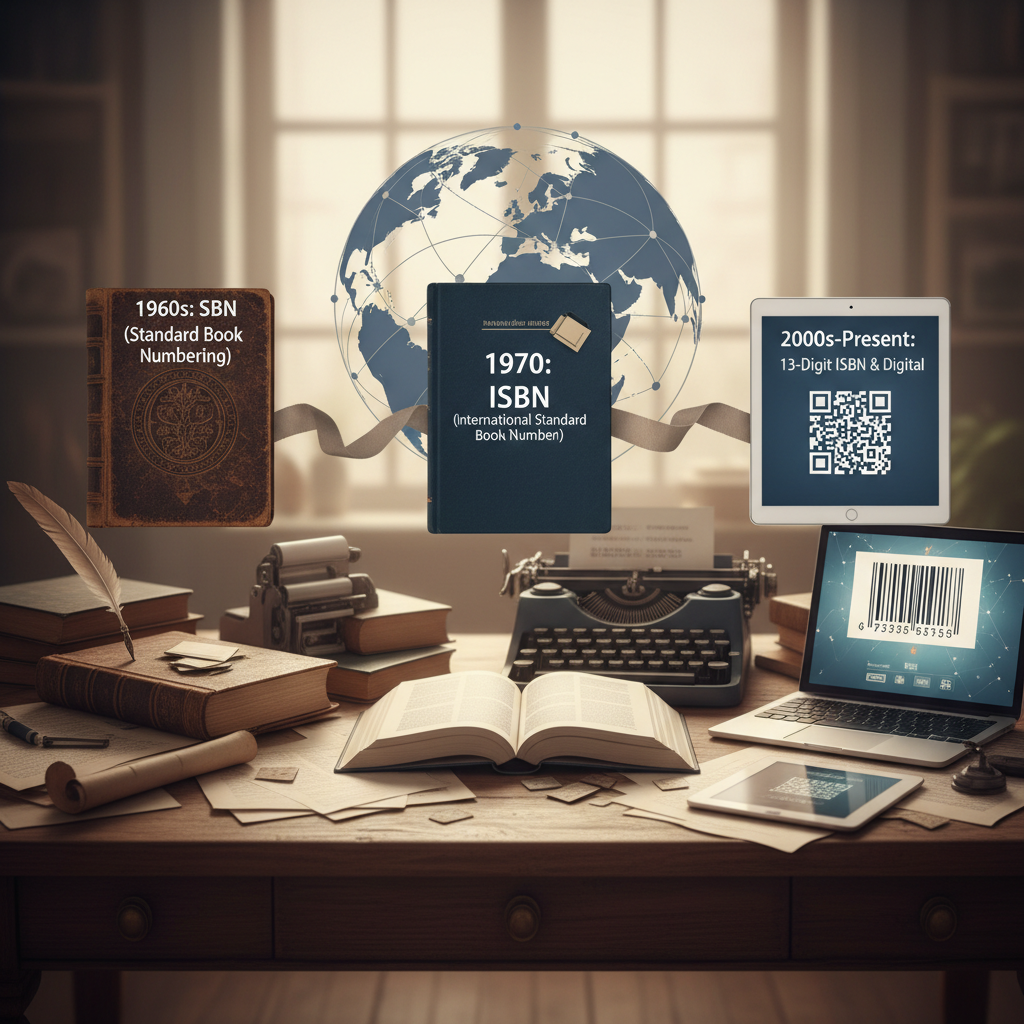
The ISBN (International Standard Book Number) was introduced in the late 1960s in the United Kingdom. At the time, the publishing industry was expanding rapidly, and booksellers needed a standardized way to identify and order specific titles without confusion. Titles can share similar names. Authors can have identical surnames. Editions change. Formats multiply.
So the industry created a universal numeric identifier: a unique number assigned to each specific edition of a book.
By 1970, the ISBN system became an international standard (ISO 2108), allowing publishers, wholesalers, bookstores, and libraries worldwide to speak the same "cataloguing language". Instead of ordering a book by title alone, retailers could use a 10-digit (later 13-digit) number to identify:
- The publisher
- The title
- The specific format (hardcover, paperback, etc.)
- The edition
Today, ISBNs are 13 digits long and structured in parts:
- Prefix (usually 978 or 979)
- Country or language group identifier
- Publisher identifier
- Title identifier
- Check digit
In simple terms:
An ISBN is not for readers. It’s for the book supply chain.
It allows:
- Bookstores to order your book
- Libraries to catalogue it
- Distributors to track it
- Retailers to scan it
- Databases to index it
Before digital publishing, having an ISBN was non-negotiable. If your book didn’t have one, it simply couldn’t enter the professional distribution system.
But then self-publishing platforms emerged and that’s when the rules started to feel less clear.
In the next section, we’ll break down exactly what an ISBN is used for today and when you actually need one (and when you don’t).
What an ISBN Is Actually Used For (Today)
Now that we know where ISBNs came from, let’s talk about how they function in modern publishing, especially in a world of ebooks, print-on-demand, and online marketplaces.
An ISBN is essentially a unique product identifier for a specific version of a book.
And that last part is important: specific version.
That means:
- Paperback = needs its own ISBN
- Hardcover = different ISBN
- Ebook (EPUB) = different ISBN
- Audiobook = different ISBN
- Revised edition = new ISBN
Even if the content is identical, each format is treated as a separate product in the distribution ecosystem.
1. Distribution & Ordering
If you want your book to be:
- Ordered by bookstores
- Listed in wholesale catalogs
- Stocked by libraries
- Distributed through global supply chains
You need an ISBN.
Retailers and distributors use ISBNs to:
- Track inventory
- Process orders
- Handle returns
- Report sales
- Integrate with global databases
Without an ISBN, your book essentially doesn’t exist in the traditional book trade system.
2. Metadata & Discoverability
ISBNs connect your book to professional metadata databases such as:
- Books in Print
- Nielsen BookData
- Bowker (U.S.)
- National library systems
These databases store information like:
- Title
- Author
- Publisher
- Publication date
- Format
- BISAC categories
- Pricing
If your ISBN metadata is incorrect, your book may be miscategorized, invisible to librarians, or difficult to order.
In other words:
An ISBN is not marketing, but it enables marketing to work properly.
3. Retail vs Platform Publishing
Here’s where things get confusing.
Some platforms (like Amazon KDP) do not require you to bring your own ISBN for ebooks. They assign their own internal identifier (ASIN).
That means you can technically publish an ebook without an ISBN; if you’re staying inside one platform’s ecosystem.
But there’s a catch:
- Platform IDs (like ASINs) only work within that platform.
- They don’t translate across bookstores.
- They don’t register your book in official ISBN databases.
- They don’t list you as the publisher of record.
So the real question becomes less about "Do I need an ISBN?"
And more about:
Where do I want my book to live?
If you only want to sell on Amazon or PubliWrite → you may not strictly need one.
If you want wide distribution, libraries, bookstores, or long-term professional positioning → you do.
In the next section, we’ll break down the most confusing ISBN myths including whether you should use a free ISBN from a platform or buy your own.
The Most Confusing ISBN Questions (Answered Clearly)
If there’s one topic that creates endless debate in indie publishing forums, it’s ISBNs. Not because they’re complicated but because platforms, distributors, and authors all approach them differently.
Let’s break down the most common points of confusion.
1. “Can I use a free ISBN from a platform?"
Yes - but you need to understand what you’re giving up.
Many print-on-demand platforms (like Amazon KDP or IngramSpark) offer free ISBNs for paperbacks. This can be convenient, especially for first-time authors who want to minimise upfront costs.
However:
- The platform becomes the publisher of record.
- You cannot use that ISBN elsewhere.
- You don’t own that identifier.
For some authors, that’s perfectly fine. If your goal is quick, low-cost publishing inside one ecosystem, a free ISBN works.
But if you want:
- Full control over your imprint
- The ability to distribute the same edition across platforms
- A long-term publishing strategy
Then owning your ISBN gives you more flexibility.
2. “Do I need a different ISBN for ebook and print?"
Yes - if you’re using ISBNs at all.
Each format is treated as a separate product. A paperback and an EPUB file are not the same product in the supply chain. Even if the text inside is identical, the format changes ordering, pricing, and distribution.
So:
- Paperback → 1 ISBN
- Hardcover → 1 ISBN
- Ebook → 1 ISBN
- Audiobook → 1 ISBN
This surprises many authors who assume one number covers everything.
It doesn’t.
3. “Do I need an ISBN for an ebook?"
Technically? Not always.
Some platforms don’t require one for ebooks. Amazon, for example, assigns an ASIN instead. PubliWrite uses blockchain inscriptions.
But if you plan to:
- Distribute widely
- Publish through aggregators
- Register in professional databases
- Be stocked by libraries
Then having an ISBN for your ebook makes your publishing setup more complete and professional.
It’s less about necessity and more about positioning.
4. “If I revise my book, do I need a new ISBN?"
It depends on the level of revision.
Minor edits (typos, formatting tweaks) → usually no new ISBN required.
Major updates (new chapters, expanded content, significant structural changes) → yes, new ISBN recommended.
A new edition equals a new product in the marketplace.
5. “Are ISBNs expensive?”
This depends on your country.
In some countries, ISBNs are free (issued by national libraries).
In others (like the U.S.), they must be purchased from the official agency (Bowker), and single ISBNs can be relatively costly.
That’s why many indie authors choose to buy ISBNs in bulk - the per-unit cost drops significantly.
But again, the decision isn’t purely financial. It’s strategic.
The Real Question: Ownership vs Convenience
At its core, the ISBN decision isn’t about paperwork.
It’s about control.
Do you want:
- Speed and simplicity?
- Or long-term flexibility and ownership?
There’s no universally correct answer - only what aligns with your publishing goals.
When You Absolutely Need an ISBN (And When You Don’t)
Now that we’ve cleared up the confusion, let’s make this practical.
Here’s how to decide whether you actually need an ISBN based on your publishing goals.
You Definitely Need an ISBN If…
- You want bookstores to stock your book
Brick-and-mortar bookstores order books through distributors and catalog systems. Those systems rely on ISBNs. Without one, your book cannot enter the traditional retail supply chain.
- You want libraries to catalogue your book
Libraries depend on ISBN metadata to index and classify books. If your goal includes institutional credibility or educational reach, an ISBN is essential.
- You’re using IngramSpark or wide distribution
Aggregators and distributors require ISBNs for print books. If you're planning global distribution beyond one ecosystem, you’ll need your own.
- You want to publish under your own imprint
Owning your ISBN means you’re listed as the publisher of record. If you’re building a long-term author brand or small press, this matters.
- You plan multiple formats
Paperback, hardcover, ebook, audiobook - each format requires its own ISBN if you're distributing professionally.
In short:
If you're treating publishing as a business, ISBN ownership gives you structure and flexibility.
You Might Not Need an ISBN If…
- You’re publishing an ebook exclusively on one platform
Platforms use their own numbers which function as internal product IDs. You can publish without buying an ISBN.
- You’re testing your first book
If you're experimenting, validating demand, or publishing casually, a free ISBN or platform-only ID may be sufficient.
- You’re publishing privately
Workbooks, internal documents, or limited-run family books often don’t require ISBNs at all.
The Strategic Perspective
Think of an ISBN like registering a company.
You can operate casually without formal structure.
But if you’re building something long-term, the infrastructure matters.
The decision becomes clearer when you ask:
- Am I publishing one book or building a catalog?
- Am I distributing locally or globally?
- Am I experimenting or planning a career?
ISBNs don’t make a book better.
But they make it easier to move professionally through the publishing ecosystem.
ISBNs, Metadata & Discoverability — Why They Still Matter in 2026

In a world dominated by algorithms, it’s easy to assume ISBNs are outdated relics of print publishing.
They’re not.
In fact, ISBNs are more important than ever because they power the metadata systems that digital discovery depends on.
ISBNs Are the Anchor of Your Book’s Metadata
When you register an ISBN, you attach structured information to your book:
- Title and subtitle
- Author name
- Publisher/imprint
- Format (paperback, hardcover, ebook, audiobook)
- Publication date
- Price
- BISAC subject categories
- Description
- Trim size and specifications
This data feeds into:
- Retailer databases (Amazon, Apple Books, Kobo)
- Library systems
- Distributor catalogues
- Global book industry databases
Without structured metadata, your book becomes harder to categorise, recommend, and distribute.
ISBNs don’t just identify your book.
They anchor it inside the global publishing infrastructure.
Algorithms Still Depend on Structure
Even though discovery feels social driven by BookTok or influencer recommendations the backend is still technical.
When a reader clicks "Buy Now", the retailer relies on:
- Correct ISBN mapping
- Proper format linking
- Accurate categories
- Clean distribution data
If metadata is wrong or incomplete:
- Your book may appear in the wrong category
- Formats may not link together
- Libraries may not list it
- International retailers may not surface it
In other words: visibility starts with infrastructure.
The Most Overlooked Advantage of ISBN Ownership
When you own your ISBN:
- You control the publisher name listed
- You maintain consistency across retailers
- You avoid being tied to one platform’s ecosystem
- You retain long-term flexibility
Free platform-issued ISBNs often list the platform as publisher.
That may not matter for a first book but it can matter if you're building a brand.
Publishing is increasingly digital.
But the supply chain behind it is still structured.
And ISBNs sit at the centre of that structure.
PubliWrite’s Perspective - Making ISBNs Simple, Not Intimidating
ISBNs shouldn’t feel complicated or restrictive. They’re simply part of the publishing infrastructure and authors should have flexibility in how they use them.
At PubliWrite, we approach ISBNs with clarity and choice in mind.
Bring Your Own ISBN
If you’ve purchased your own ISBNs (for example, through Bowker or your national agency), you can absolutely use them. This gives you full control over your publisher-of-record status and long-term catalog management.
Use a PubliWrite-Provided ISBN
Authors on our paid plans can also choose to use an ISBN provided by PubliWrite. These ISBNs are professionally registered and integrated into industry-standard databases, ensuring your book is properly structured for retailers, distributors, and library systems.
Proper Metadata & Industry Standards
Regardless of which ISBN route you choose, we structure your metadata correctly including format separation, BISAC categorisation, and compatibility with ISBN databases and ordering systems.
Format Clarity
Each format (ebook, paperback, hardcover) is treated as its own product, ensuring clean cataloguing and discoverability across platform.
Our goal isn’t to lock authors into one model.
It’s to give you options while making sure the technical side of publishing is handled professionally and transparently.
Final Thoughts: ISBNs Aren’t Complicated, They’re Foundational
So, do you need an ISBN?
Technically, not always.
Strategically? Very often, yes.
If you’re publishing exclusively on one platform and don’t plan to distribute widely, you can rely on a platform-issued identifier. But the moment you start thinking about long-term visibility, library access, bookstore distribution, international reach, or building your publishing brand - ISBNs stop being optional and start becoming essential.
They aren’t glamorous.
They don’t improve your prose.
They don’t sell your book on their own.
But they make your book searchable, orderable, trackable, and professionally positioned within the global publishing ecosystem.
In a world where discoverability determines success, infrastructure matters just as much as creativity.
ISBNs are part of that infrastructure.
And when handled correctly, with clarity, flexibility, and proper metadata, they stop feeling like a bureaucratic hurdle and start feeling like what they truly are: the passport that allows your book to travel.
👉 Are you planning to use your own ISBN, or rely on a platform-issued one?
👉 What confused you most about ISBNs when you first started publishing?
Before you go:️️
- Follow us: X | LinkedIn | Instagram | Meta
- Visit our website at https://publiwrite.com